
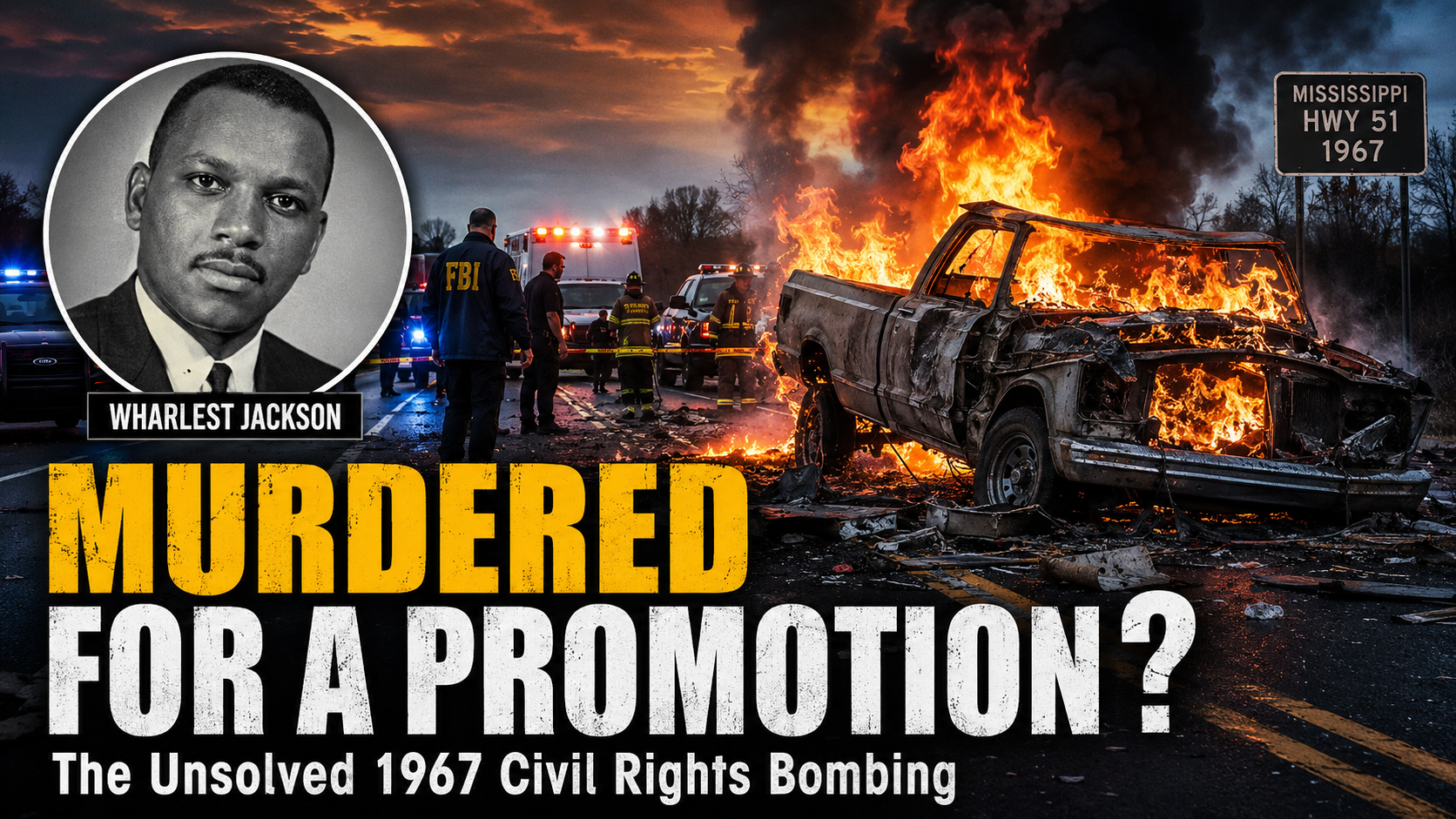
Wharlest Jackson: The 1967 Civil Rights Murder That Still Demands Justice
On February 27, 1967, Wharlest Jackson, a 37-year-old African American husband, father, and employee at Armstrong Tire & Rubber Company in Natchez, Mississippi, was driving home from work when a powerful bomb hidden beneath his pickup truck exploded. The blast killed him instantly and became one of the most shocking racially motivated murders of the Civil Rights era.
A Promotion That Changed Everything
Wharlest Jackson had recently accepted a promotion that had historically been reserved for white employees. At a time when racial segregation and discrimination were deeply rooted across the American South, his advancement represented progress—but it also made him a target for violent white supremacists who opposed racial equality.
Friends and family said Jackson knew the risks but believed every American deserved equal opportunities regardless of race.
The Deadly Attack
As Jackson drove home through Natchez on the evening of February 27, 1967, an explosive device hidden beneath the driver’s seat detonated without warning. The explosion completely destroyed his truck and claimed his life instantly.
The brutal killing shocked Mississippi and drew national attention, highlighting the extreme violence many African Americans faced during the Civil Rights Movement.
FBI Investigation
Federal investigators, including the FBI, launched an extensive investigation into the bombing. Over time, authorities identified several suspects believed to have connections with the Ku Klux Klan (KKK), a white supremacist organization responsible for numerous acts of racial terror during that period.
Despite years of investigation and multiple leads, prosecutors were unable to gather enough admissible evidence to secure criminal convictions. As a result, no one has ever been convicted for Wharlest Jackson’s murder, and the case remains officially unsolved.
A Lasting Legacy
Wharlest Jackson’s death became a symbol of the sacrifices made by countless African Americans who fought for equal rights and workplace equality during one of the most difficult periods in American history.
Today, historians and civil rights advocates continue to remember his story as a reminder of the importance of justice, equality, and the ongoing fight against racial hatred.
Separating Fact from Social Media
Many viral posts claim that “the FBI knew exactly who did it.” Historical records show that investigators identified suspects and believed certain individuals were involved, but the available evidence was not sufficient to obtain criminal convictions in court. Therefore, it is more accurate to say that authorities developed suspects, but the case remains officially unsolved.
